Jeg er faldet over denne musik-side, hvor der er nogle glimrende live-optagelser fra specielle lokationer. Det er fyldt med upcoming-bands og singer/songwriter alle indenfor den "alternative" musikgenre. Det er også rart at se at der er lavet flere optagelser med danske bands.
Jeg har lige udvalgt nogle få, men der er heldigvis nok at gå i gang med.
James Yorkston
Willard Grant Conspiracy
Efterklang
søndag, juni 13, 2010

søndag, april 04, 2010
Eels - End Times
Min favoritplade fra 2010 er indtil videre Eels's "End Times". Pladen har E indspillet i sin kælder og albummet er hovedsageligt indspillet af ham selv. Selv om Eels har et imponerende bagkatalog, så står denne for mig som hans bedste.
Pladen omhandler et brudt forhold og følelserne, som man sidder tilbage med efterfølgende. Det er selvfølgelig en meget deprimerende plade, men der er også plads til en smule håb, og så er den også fyldt med E's galgenhumor.
Jeg har udvalgt tre stærke numre - især On my feet - som er det sidste nummer på pladen.
mandag, december 14, 2009
Best Albums 2009
Dette er min liste over de bedste albums fra 2009:
10. The Black Heart Procession - Six
 The Black Heart Procession har på Six igen lavet en plade, der beskriver livets skyggesider. Musikken er mørk og dyster og pladen virker utrolig sammenhængende.
De stærkeste sange på pladen er When you finish me, Drugs og Forget my heart.
Myspace
9. Dinosaur Jr. - Farm
 Dinosaur Jr. har i 2009 udgivet deres 9. studiealbum, og Dinosaur Jr. lyder stadig som de har gjort i de sidste 25 år. Musikken er stadigvæk kendetegnet ved J Mascis helt specielle guitar-lyd og hans skrøbelige vokal.
Der bliver ikke opfundet nogen dybtallerken på Farm, men bandet beviser stadig, hvorfor at bandet har været et af de mest indflydelsesrige band indenfor den alternative rockscene i 80'erne og 90'erne. Farm er vel et af deres bedste albums nogensinde.
De bedste sange er Pieces, Plans og Said the People.
Myspace
8. The Antlers - Hospice
 Brooklyn-trioen The Antlers udgav i 2009 deres tredje album Hospice. Albummet handler om 2 personer, der møder hinanden på et hospice.
Musikken er stemningsmættet og passer fremragende til sangenes handling om liv og død samt drømme.
De stærkeste sange er selvom at det er en plade som skal ses som en helhed Sylvia, Atrophy og Wake.
Dette er en plade som sagtens kunne være en endt længere oppe på listen, hvis jeg havde kendt til den tidligere på året.
Myspace
7. Sonic Youth - The Eternal
 Støjrockens godfather har i 2009 udgivet deres 16. studiealbum The Eternal. Bandet er langtfra banebrydende med dette album. Til gengæld virker de langt mere målrettet end længe, og man kan sige at de er tilbage ved fordums styrke.
Sangene er skarpe og leveres med gejst, og pladen er knap så eksperimenterende som de forrige. Dette klæder bandet. Sonic Youth beviser på denne plade, at der stadig er lang til pensionsalderen.
De bedste sange er Antenna, What We Know og Walkin Blue.
Myspace
6. Broken Records - Until the Earth Begins to Part
 Broken Records debutalbum er et yderst vellykket album. Musikken er en god blanding af folk/rock, og leder tankerne hen på the Waterboys og et af mit egne favoritband Midnight Choir. Der benyttes udover guitar, bas og trommer også violiner, trompeter, klaver, mandolin, ukulele og cello.
Armbevægelserne er store og musikken er pompøs, men jeg synes at det holder hele vejen.
De bedste sange fra pladen er If The News Makes You Sad, Don't Watch It, A Promise og Wolwes.
Myspace
5. Animal Collective - Merriweather Post Pavilion
 Animal Collective's har på deres 9. studiealbum formået at skabe en plade, hvor deres anarkistiske tilgang til musikskrivningen går hånd i hånd med de gode sange. Der kan helt sikkert hentet inspiration fra the Beach Boys især på den vokale front. Musikken er dog så rodet og anderledes, at pladen kan stå helt alene.
Pladen er helt sikkert en klassiker og vil nok på de fleste årslister ende på førstepladsen.
De stærkeste sange på pladen er In the Flowers, My Girls og Daily Routine.
Myspace
4. Wilco - Wilco (the album)
 Det syvende studiealbum fra bringer ikke meget nyt i forhold til tidligere, men er endnu engang et bevis på, at Jeff Tweedy simpelthen ikke kan lave en dårlig plade.
Musikken ligger sig tæt op af deres forrige plade den melodiøse Sky Blue Sky, men med enkelte afstikkere som vækker minder om mesterværket A Ghost is Born. De bedste sange er One Wing, Bull Black Nova og Country Disappeared.
Man kan kun blive imponeret over, at bandet kan blive ved med at have et så højt niveau på deres plader.
Myspace
3. The XX - XX
 Debutpladen fra the XX har høstet en masse fortjente roser. Det er en plade uden de store armbevægelser, men er derimod et bevis på at man kan nå langt med en minimalistisk tilgang til sangskrivningen.
Musikken er dyster og er ellers opbygget omkring de to vokalister Romy Madley Croft og Oliver Slim fremragende sammenspil.
De stærkeste sange er Crystalised, Heart Skipped A Beat og Shelter.
Myspace
2. Antony & the Johnsons - The Crying Light
 Det tredje album fra Antony And The Johnsons fortsætter på mange måder i den samme rille som de to tidligere albums. Musikken er dog knap så pompøs og eksperimenterende som tidligere og på visse sange er tonen ligefrem poppet.
De bedste sange er Her Eyes Are Underneath The Ground, Epilepsy Is Dancing og Another World.
Det tårnhøje niveau fra I am a Bird Now kan ikke holdes helt, men The Crying Light er fra start til slut en stor oplevelse, der kun vokser for hver gennemlytning.
Myspace
1. Phoenix - Wolfgang Amadeus Phoenix
 Phoenix var for mig et helt ukendt fransk band inden dette år startede. Albummet er fyldt med gode popsange med små finurlige opbygninger, guitarriffs og synth-lyde. Pladen er nem at komme til men gemmer stadig på en masse overraskelser ved flere gennemlytninger.
De stærkeste sange fra pladen er Lisztomania, Lasso og Countdown.
Facebook
Bedste EP:
The Mountain Goats & John Vanderslice - Moon Colony Bloodbath
Bedste genudgivelse:
Chris Bell - I am the Cosmos
Bedste plade fra 2008, som jeg først rigtig har hørt i 2009:
Peter Broderick - Home
10. The Black Heart Procession - Six
 The Black Heart Procession har på Six igen lavet en plade, der beskriver livets skyggesider. Musikken er mørk og dyster og pladen virker utrolig sammenhængende.
De stærkeste sange på pladen er When you finish me, Drugs og Forget my heart.
Myspace
9. Dinosaur Jr. - Farm
 Dinosaur Jr. har i 2009 udgivet deres 9. studiealbum, og Dinosaur Jr. lyder stadig som de har gjort i de sidste 25 år. Musikken er stadigvæk kendetegnet ved J Mascis helt specielle guitar-lyd og hans skrøbelige vokal.
Der bliver ikke opfundet nogen dybtallerken på Farm, men bandet beviser stadig, hvorfor at bandet har været et af de mest indflydelsesrige band indenfor den alternative rockscene i 80'erne og 90'erne. Farm er vel et af deres bedste albums nogensinde.
De bedste sange er Pieces, Plans og Said the People.
Myspace
8. The Antlers - Hospice
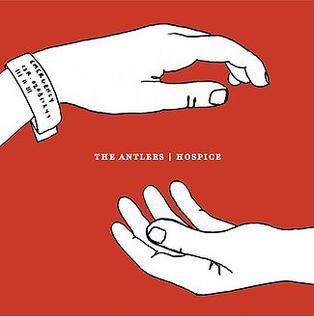 Brooklyn-trioen The Antlers udgav i 2009 deres tredje album Hospice. Albummet handler om 2 personer, der møder hinanden på et hospice.
Musikken er stemningsmættet og passer fremragende til sangenes handling om liv og død samt drømme.
De stærkeste sange er selvom at det er en plade som skal ses som en helhed Sylvia, Atrophy og Wake.
Dette er en plade som sagtens kunne være en endt længere oppe på listen, hvis jeg havde kendt til den tidligere på året.
Myspace
7. Sonic Youth - The Eternal
 Støjrockens godfather har i 2009 udgivet deres 16. studiealbum The Eternal. Bandet er langtfra banebrydende med dette album. Til gengæld virker de langt mere målrettet end længe, og man kan sige at de er tilbage ved fordums styrke.
Sangene er skarpe og leveres med gejst, og pladen er knap så eksperimenterende som de forrige. Dette klæder bandet. Sonic Youth beviser på denne plade, at der stadig er lang til pensionsalderen.
De bedste sange er Antenna, What We Know og Walkin Blue.
Myspace
6. Broken Records - Until the Earth Begins to Part

Armbevægelserne er store og musikken er pompøs, men jeg synes at det holder hele vejen.
De bedste sange fra pladen er If The News Makes You Sad, Don't Watch It, A Promise og Wolwes.
Myspace
5. Animal Collective - Merriweather Post Pavilion
 Animal Collective's har på deres 9. studiealbum formået at skabe en plade, hvor deres anarkistiske tilgang til musikskrivningen går hånd i hånd med de gode sange. Der kan helt sikkert hentet inspiration fra the Beach Boys især på den vokale front. Musikken er dog så rodet og anderledes, at pladen kan stå helt alene.
Pladen er helt sikkert en klassiker og vil nok på de fleste årslister ende på førstepladsen.
De stærkeste sange på pladen er In the Flowers, My Girls og Daily Routine.
Myspace
4. Wilco - Wilco (the album)
_cover.jpg/220px-Wilco_(The_Album)_cover.jpg)
Musikken ligger sig tæt op af deres forrige plade den melodiøse Sky Blue Sky, men med enkelte afstikkere som vækker minder om mesterværket A Ghost is Born. De bedste sange er One Wing, Bull Black Nova og Country Disappeared.
Man kan kun blive imponeret over, at bandet kan blive ved med at have et så højt niveau på deres plader.
Myspace
3. The XX - XX

Musikken er dyster og er ellers opbygget omkring de to vokalister Romy Madley Croft og Oliver Slim fremragende sammenspil.
De stærkeste sange er Crystalised, Heart Skipped A Beat og Shelter.
Myspace
2. Antony & the Johnsons - The Crying Light
 Det tredje album fra Antony And The Johnsons fortsætter på mange måder i den samme rille som de to tidligere albums. Musikken er dog knap så pompøs og eksperimenterende som tidligere og på visse sange er tonen ligefrem poppet.
De bedste sange er Her Eyes Are Underneath The Ground, Epilepsy Is Dancing og Another World.
Det tårnhøje niveau fra I am a Bird Now kan ikke holdes helt, men The Crying Light er fra start til slut en stor oplevelse, der kun vokser for hver gennemlytning.
Myspace
1. Phoenix - Wolfgang Amadeus Phoenix
Phoenix var for mig et helt ukendt fransk band inden dette år startede. Albummet er fyldt med gode popsange med små finurlige opbygninger, guitarriffs og synth-lyde. Pladen er nem at komme til men gemmer stadig på en masse overraskelser ved flere gennemlytninger.De stærkeste sange fra pladen er Lisztomania, Lasso og Countdown.
Bedste EP:
The Mountain Goats & John Vanderslice - Moon Colony Bloodbath
Bedste genudgivelse:
Chris Bell - I am the Cosmos
Bedste plade fra 2008, som jeg først rigtig har hørt i 2009:
Peter Broderick - Home
torsdag, januar 01, 2009
Best Albums 2008
This is a list of the best music albums of 2008. Feel free to comment.
10. The Gutter Twins - Saturnalia
 The idea of Dulli and Lanegan collaborating together as the Gutter Twins has been in the works since 2003. But it wasn't until last year that the pair finally turned their full attention to the project. Saturnalia, the Gutter Twins' debut, was released earlier this year by Sub Pop. The album is yet another exploration of the dark side.
The Gutter Twins website
The Gutter Twins at Myspace
9. Thalia Zedek Band - Liars and Prayers
 Thalia Zedek's second album for Thrill Jockey finds the ex-Come frontwoman in fine voice and backed by a band who know just how to present her songs. A very political record - the title refers to those who lie and those who pray - LIARS AND PRAYERS finds Zedek's wonderfully coarse voice enveloped by simple but moving arrangements and the best set of songs she has written since her Come days.
Thalia Zedek Band at Myspace
8. Cloud Cult - Feel Good Ghosts (Tea-partying Through Tornadoes)
 The group, led by Craig Minowa, might best fit in the electronica-folk-indie-chamber-pop-rock genre. That won't really give you an idea of what goes on through the 13 tracks of Cloud Cult's latest album, Feel Good Ghosts (Tea-partying Through Tornadoes). It's a genre-mashing set of songs that is at once weird, wonderful, inspiring, exciting, and strange. Cloud Cult is a remarkable band who have made a album just as full of melodic hooks as mind-blowing experimentation.
Cloud Cult at Myspace
7. Conor Oberst - Conor Oberst
 Abandoning the Bright Eyes moniker he's been performing under since his teens, Conor Oberst reverted to his birth name for his 2008 follow-up to 2007's Cassadaga.
Conor Oberst at Myspace
6. Okkervil River - The Stand-Ins
 Essentially a sequel to 2007’s The Stage Names, which was briefly considered for release as a two-disc album before being scaled down to a single album, Okkervil River's The Stand Ins uses central images of musicians and life on the stage to again address many of the themes that first surfaced on the band's 2007 album.
Emotional without being weepy, literate without being pretentious, The Stand Ins is another excellent release from a highly creative and evolving band.
Okkervil River at Myspace
5. TV on the Radio - Dear Science
 Dear Science is a brilliant balancing act between pop aspiration and music-geek aesthetics. More tuneful than its predecessor, the album is packed with New Wave hooks and funky dance beats — albeit amid bleak lyrical visions, Afrobeat rhythmic arrangements and densely layered, terabyte-era production. Though that sound might not make for megastardom, it's made for one damn fine record.
TV on the Radio at Myspace
4. Samamidon - All is Well
 Sam Amidon, more commonly known as Samamidon, very quietly released one of the year’s best folk records way back in February. It’s called All Is Well, and if it sounds at all timeless, well, it’s because it basically is. All 10 songs come from the public domain, songs passed down through generations until the origins are all but forgotten. There is a natural sadness in Amidon’s voice, which suits the quiet and contemplative mood of these 10 songs perfectly.
Samamidon at Myspace
3. Fleet Foxes - Fleet Foxes
 Fleet Foxes describe their music as "baroque pop, music from fantasy movies, Motown, block harmonies ... not much of a rock band", which is one way of describing the indefinable brilliance of one of those records that sounds like it has arrived, fully formed, from another planet. Though there are musical touchstones - English folk, late 60s west-coast music (particularly the Beach Boys and Love) - this is the sound of late-night forests, skipping animals, music made by people as old as the hills they dwell in. Implausibly, they are actually in their 20s and live in Seattle. The dizzyingly uplifting four-part harmonies of songs such as Tiger Mountain Peasant Song are interspersed with profound darkness in the death-stalked Your Protector, or Oliver James, the chilling tale of a child's drowning. It all adds up to a landmark in American music, an instant classic.
Fleet Foxes at Myspace
2. Sigur Rós - Með suð í eyrum við spilum endalaust
 With their fifth full-length album, Med Sud I Eyrum Vid Spilum Endalaust, Sigur Rós have taken the poppy, sunshiny leanings of their previous album a step further into the light. As ever with Sigur Rós, if you're a fan you will lap this up - the unconvinced will, despite the more commercial touches, probably remain unconvinced. Overall though, this is another wondrous album from a band at the height of their considerable powers.
Sigur Rós at Myspace
1. Bon Iver - For Emma, Forever Ago
 Nu folk's Bon Iver, aka Justin Vernon, recorded For Emma, Forever Ago in an isolated cabin in Wisconsin, where he existed on a diet of deer he'd slaughtered and water and leftovers delivered by his dad. Accordingly, his debut prompts few comparisons, as if Vernon's three-month stint in self-imposed exile wasn't just an exercise in survivalism but an attempt to underscore the distance dividing Bon Iver from his contemporaries. Certainly, For Emma, though only nine tracks long, is as beautiful, bleak and intimate as anything 2008 is likely to throw up.
Bon Iver at Myspace
10. The Gutter Twins - Saturnalia
 The idea of Dulli and Lanegan collaborating together as the Gutter Twins has been in the works since 2003. But it wasn't until last year that the pair finally turned their full attention to the project. Saturnalia, the Gutter Twins' debut, was released earlier this year by Sub Pop. The album is yet another exploration of the dark side.
The Gutter Twins website
The Gutter Twins at Myspace
9. Thalia Zedek Band - Liars and Prayers
 Thalia Zedek's second album for Thrill Jockey finds the ex-Come frontwoman in fine voice and backed by a band who know just how to present her songs. A very political record - the title refers to those who lie and those who pray - LIARS AND PRAYERS finds Zedek's wonderfully coarse voice enveloped by simple but moving arrangements and the best set of songs she has written since her Come days.
Thalia Zedek Band at Myspace
8. Cloud Cult - Feel Good Ghosts (Tea-partying Through Tornadoes)
 The group, led by Craig Minowa, might best fit in the electronica-folk-indie-chamber-pop-rock genre. That won't really give you an idea of what goes on through the 13 tracks of Cloud Cult's latest album, Feel Good Ghosts (Tea-partying Through Tornadoes). It's a genre-mashing set of songs that is at once weird, wonderful, inspiring, exciting, and strange. Cloud Cult is a remarkable band who have made a album just as full of melodic hooks as mind-blowing experimentation.
Cloud Cult at Myspace
7. Conor Oberst - Conor Oberst
 Abandoning the Bright Eyes moniker he's been performing under since his teens, Conor Oberst reverted to his birth name for his 2008 follow-up to 2007's Cassadaga.
Conor Oberst at Myspace
6. Okkervil River - The Stand-Ins
 Essentially a sequel to 2007’s The Stage Names, which was briefly considered for release as a two-disc album before being scaled down to a single album, Okkervil River's The Stand Ins uses central images of musicians and life on the stage to again address many of the themes that first surfaced on the band's 2007 album.
Emotional without being weepy, literate without being pretentious, The Stand Ins is another excellent release from a highly creative and evolving band.
Okkervil River at Myspace
5. TV on the Radio - Dear Science
 Dear Science is a brilliant balancing act between pop aspiration and music-geek aesthetics. More tuneful than its predecessor, the album is packed with New Wave hooks and funky dance beats — albeit amid bleak lyrical visions, Afrobeat rhythmic arrangements and densely layered, terabyte-era production. Though that sound might not make for megastardom, it's made for one damn fine record.
TV on the Radio at Myspace
4. Samamidon - All is Well
 Sam Amidon, more commonly known as Samamidon, very quietly released one of the year’s best folk records way back in February. It’s called All Is Well, and if it sounds at all timeless, well, it’s because it basically is. All 10 songs come from the public domain, songs passed down through generations until the origins are all but forgotten. There is a natural sadness in Amidon’s voice, which suits the quiet and contemplative mood of these 10 songs perfectly.
Samamidon at Myspace
3. Fleet Foxes - Fleet Foxes
 Fleet Foxes describe their music as "baroque pop, music from fantasy movies, Motown, block harmonies ... not much of a rock band", which is one way of describing the indefinable brilliance of one of those records that sounds like it has arrived, fully formed, from another planet. Though there are musical touchstones - English folk, late 60s west-coast music (particularly the Beach Boys and Love) - this is the sound of late-night forests, skipping animals, music made by people as old as the hills they dwell in. Implausibly, they are actually in their 20s and live in Seattle. The dizzyingly uplifting four-part harmonies of songs such as Tiger Mountain Peasant Song are interspersed with profound darkness in the death-stalked Your Protector, or Oliver James, the chilling tale of a child's drowning. It all adds up to a landmark in American music, an instant classic.
Fleet Foxes at Myspace
2. Sigur Rós - Með suð í eyrum við spilum endalaust
 With their fifth full-length album, Med Sud I Eyrum Vid Spilum Endalaust, Sigur Rós have taken the poppy, sunshiny leanings of their previous album a step further into the light. As ever with Sigur Rós, if you're a fan you will lap this up - the unconvinced will, despite the more commercial touches, probably remain unconvinced. Overall though, this is another wondrous album from a band at the height of their considerable powers.
Sigur Rós at Myspace
1. Bon Iver - For Emma, Forever Ago
 Nu folk's Bon Iver, aka Justin Vernon, recorded For Emma, Forever Ago in an isolated cabin in Wisconsin, where he existed on a diet of deer he'd slaughtered and water and leftovers delivered by his dad. Accordingly, his debut prompts few comparisons, as if Vernon's three-month stint in self-imposed exile wasn't just an exercise in survivalism but an attempt to underscore the distance dividing Bon Iver from his contemporaries. Certainly, For Emma, though only nine tracks long, is as beautiful, bleak and intimate as anything 2008 is likely to throw up.
Bon Iver at Myspace
søndag, februar 17, 2008
Another good album of 2007
Så kom første tilføjelse til 2007-listen allerede ;o)
Dette er simpelthen et fremragende album!
Cloud Cult's website
Cloud Cult's myspace

Cloud Cult - The Meaning of 8
lostatsea.net: With its opening barrage of digital organicism, Cloud Cult's follow up to 2005's acclaimed and unfortunately named Advice from the Happy Hippopotamus sets about exemplifying the creative bloom of sound collage. While not necessarily directly in deed, primary songwriter Craig Minowa exhibits in spirit the high points of pop music's excesses; lines can be drawn from The Meaning of 8 to the old (Pixies, the heyday of the Elephant 6 collective) and the new (Arcade Fire, Dan Snaith's Manitoba/Caribou). Awkward vocals, oddball dynamics, weeping strings, dirty electronic flourishes, off-piste melodies - although it is all loosely, sometimes perilously darned together, everything is here to a certain degree and ultimately it all holds water.
Lyrically, Minowa is in peak form here, which warrants mentioning due to the fact that his vocal delivery is generally high in the mix, often delivered in a cadence that adds its own percussive punch at the right time. The Meaning of 8's topical projections touch on compassion, voyeurism, faith, escapism, naturalist ideas and of course the personal trials of the singer himself, who lost his young son several years ago. While the songs are sermons of a sort, Minowa never really gets preachy; his delivery is often over-the-top but never feels pretentious.
Much like the business end of things (the environmental impact of their tours are offset by the purchase of green energy credits, the production of their CDs is undertaken with recycled materials and clean energy), Cloud Cult's music teeters on the knife-edge between indulgence and restraint. Balance is everything. The band's songs are wrought with dissonance and turmoil, but the melodies are palpable enough to provide parity, at times conjuring visions of Frankensteinian ensembles like Kammerflimmer Kollektief fronted by Mates of State.
From the early going The Meaning of 8's distorted bass lines bound with ebullience beneath a clattering kitchen sink din of toy piano, dilapidated drum kit, electric and acoustic guitars, laptop glitches, glockenspiel, and bowed strings. The ingredients might not be off the shelf, but the pudding is far from proofless, as The Meaning of 8's beats are effusive, prompting if not toe tapping then at the least head nodding, and on occasion ("Please Remain Calm" is a good example from the album's early going) go so far as to incite dance floor grooves.
"Brain Gateway" is an off-key dirge, its blown-out bass (reminiscent of Neutral Milk Hotel's On Avery Island) paired as counterpoint with Minowa's plaintive vocals, the subdued melodies of keys and toy piano treating the track to a bright balance. "Purpose" hums along, fuzzy synth lines anchoring a mélange of airy percussion and distant, filtered piano. Later, the raucous instrumental "Shape of 8" pairs hollow digital drums with a swell of squelching effects and glittery tambourine for a minute and a half before drifting off into the carnivalesque parade of "The Girl Underground."
Even when there seems to be a tug toward restraint, such as in "The Deaf Girl's Song," simple acoustic guitar strums, with accompaniment from soft percussion and sweeping strings, eventually birth a fullness of their own that, while a far cry from the album's more congested numbers, is rich in its own right. The track is followed by "Hope," which likewise begins softly enough before devolving into a teeming swirl of sounds, the band's innumerable elements and tones fighting amongst themselves while drowning in their own wake. The track eventually calms down and fades out to the dead silence of "Song of the Deaf Girl" at album's end, and just like that the 19 tracks are primed for another cycle.
Although The Meaning of 8 is wrought with beautiful moments - quasi symphonic passages, touching vocal melodies, invigorating (but never abrupt) dynamic shifts - the album's imperfections are what perhaps best exemplifies Cloud Cult's textural agenda. Their music, like life, isn't about surgical precision or hygienic sheen; sticking your head into the middle of a Cloud Cult track, like sticking your head into any given moment in the stream of life, can be disorienting and chaotic, if not downright scary. But viewed from a panoramic vantage point The Meaning of 8 is about impulse, saturation, dirt under the nails, wounds that scab over and become beautiful scars. As remote or bristling as things might feel one second, in the end everything works out, for better or worse, blemishes and all.
Chemicals Collide:
Pretty Voice:
Chain Reaction:
Dette er simpelthen et fremragende album!
Cloud Cult's website
Cloud Cult's myspace

Cloud Cult - The Meaning of 8
lostatsea.net: With its opening barrage of digital organicism, Cloud Cult's follow up to 2005's acclaimed and unfortunately named Advice from the Happy Hippopotamus sets about exemplifying the creative bloom of sound collage. While not necessarily directly in deed, primary songwriter Craig Minowa exhibits in spirit the high points of pop music's excesses; lines can be drawn from The Meaning of 8 to the old (Pixies, the heyday of the Elephant 6 collective) and the new (Arcade Fire, Dan Snaith's Manitoba/Caribou). Awkward vocals, oddball dynamics, weeping strings, dirty electronic flourishes, off-piste melodies - although it is all loosely, sometimes perilously darned together, everything is here to a certain degree and ultimately it all holds water.
Lyrically, Minowa is in peak form here, which warrants mentioning due to the fact that his vocal delivery is generally high in the mix, often delivered in a cadence that adds its own percussive punch at the right time. The Meaning of 8's topical projections touch on compassion, voyeurism, faith, escapism, naturalist ideas and of course the personal trials of the singer himself, who lost his young son several years ago. While the songs are sermons of a sort, Minowa never really gets preachy; his delivery is often over-the-top but never feels pretentious.
Much like the business end of things (the environmental impact of their tours are offset by the purchase of green energy credits, the production of their CDs is undertaken with recycled materials and clean energy), Cloud Cult's music teeters on the knife-edge between indulgence and restraint. Balance is everything. The band's songs are wrought with dissonance and turmoil, but the melodies are palpable enough to provide parity, at times conjuring visions of Frankensteinian ensembles like Kammerflimmer Kollektief fronted by Mates of State.
From the early going The Meaning of 8's distorted bass lines bound with ebullience beneath a clattering kitchen sink din of toy piano, dilapidated drum kit, electric and acoustic guitars, laptop glitches, glockenspiel, and bowed strings. The ingredients might not be off the shelf, but the pudding is far from proofless, as The Meaning of 8's beats are effusive, prompting if not toe tapping then at the least head nodding, and on occasion ("Please Remain Calm" is a good example from the album's early going) go so far as to incite dance floor grooves.
"Brain Gateway" is an off-key dirge, its blown-out bass (reminiscent of Neutral Milk Hotel's On Avery Island) paired as counterpoint with Minowa's plaintive vocals, the subdued melodies of keys and toy piano treating the track to a bright balance. "Purpose" hums along, fuzzy synth lines anchoring a mélange of airy percussion and distant, filtered piano. Later, the raucous instrumental "Shape of 8" pairs hollow digital drums with a swell of squelching effects and glittery tambourine for a minute and a half before drifting off into the carnivalesque parade of "The Girl Underground."
Even when there seems to be a tug toward restraint, such as in "The Deaf Girl's Song," simple acoustic guitar strums, with accompaniment from soft percussion and sweeping strings, eventually birth a fullness of their own that, while a far cry from the album's more congested numbers, is rich in its own right. The track is followed by "Hope," which likewise begins softly enough before devolving into a teeming swirl of sounds, the band's innumerable elements and tones fighting amongst themselves while drowning in their own wake. The track eventually calms down and fades out to the dead silence of "Song of the Deaf Girl" at album's end, and just like that the 19 tracks are primed for another cycle.
Although The Meaning of 8 is wrought with beautiful moments - quasi symphonic passages, touching vocal melodies, invigorating (but never abrupt) dynamic shifts - the album's imperfections are what perhaps best exemplifies Cloud Cult's textural agenda. Their music, like life, isn't about surgical precision or hygienic sheen; sticking your head into the middle of a Cloud Cult track, like sticking your head into any given moment in the stream of life, can be disorienting and chaotic, if not downright scary. But viewed from a panoramic vantage point The Meaning of 8 is about impulse, saturation, dirt under the nails, wounds that scab over and become beautiful scars. As remote or bristling as things might feel one second, in the end everything works out, for better or worse, blemishes and all.
Chemicals Collide:
Pretty Voice:
Chain Reaction:
søndag, januar 20, 2008
Ryan Adams on Letterman
Excellent performance by Ryan Adams & The Cardinals!
I taught myself how to grow old!
I taught myself how to grow old!
fredag, december 28, 2007
10 Good Albums of 2007
Jeg har nu endeligt fået taget mig sammen...
Det er ikke en "Best of 2007"-liste, da jeg langt fra har fået hørt de plader, som bliver anbefalet på de forskellige musikblogs. Det er bare 10 gode plader, som jeg virkelig er faldet for!
Det kan være, at jeg laver en "best of"-liste, hen over sommeren eller vinteren næste år...
Tak til alle, der har leverede de gode anmeldelser!
I alfabetisk orden:
Andrew Bird - Armchair Apocrypha
 Allmusic.com:
With Armchair Apocrypha, Andrew Bird takes another developmental departure from his previous works, though not nearly in as drastic a fashion as his previous album-to-album jumps in style. This has become expected of Bird and is one of the merits that make each of his releases highly anticipated. Where in the past Bird has impressed listeners with his violin artistry and vocal delivery, and later his use of electronic looping and whistling, with Armchair he allows the songs to breath more on their own, using the aforementioned elements to blend into the structural integrity of the songs rather than predominately featuring each component. This is not to say his previous approaches were ineffective, but rather an observation that is one of the essential reasons Armchair Apocrypha holds together more cohesively than Bird's previous outings. Perhaps the heavy inclusion of drummer and electric pianist Martin Dosh has much to do with this cohesion; it is the first time Dosh and Bird have teamed up on a recording, though the two had been touring together with regularity for a couple of years previous to this. Dosh provides excellent propulsion as a drummer and his Rhodes/Wurlitzer playing adds a deep and dynamic warmth to the entire album. With a few other guests, most noticeably bassist Chris Morrissey's playing on five of the 12 tracks, Armchair is the first album since the 2001 release of The Swimming Hour that feels like a band playing together rather than songs built in separate layers. The majority of the album feels so much more relaxed than much of Bird's previous works, due much in part to his almost laconic vocal delivery throughout. It's the first album that captures Bird's much lauded live approach, almost as if he had hit some completely transcendental place mentally, forgotten his place in the studio, and instead just sang while in some distant reverie -- the way one sings unencumbered while washing the dishes in an empty house and, unknowingly, hones his artistic blade cleaning dirty knife by dirty knife. The most excellent example of this delivery is on the majestically sprawling "Armchairs," a complex and dynamic number that unfolds cinematically in that it entirely captures attention and does not relent through nearly seven minutes, even without a single repeating melody. It is only fitting, then, that in the first climax of "Armchairs," Bird belts out, "Time, it's a crooked bow!" over a dramatic musical descent. And he's right, the seven minutes in which "Armchairs" unfolds are so captivating, the time feels cut in half. That said, the entirety of Armchair Apocrypha does not completely have that level of looseness and adventure. "Imitosis," a reworked version of "I" from the 2003 release Weather Systems, holds some of the stiffness of Bird's previous recordings which, to be fair, did not seem so stiff before Armchair Apocrypha was released. Still, as likeable a revision as "Imitosis" is, the song feels somewhat out of place alongside the bulk of these tracks and, being the second album in a row where Bird has updated a song from Weather Systems ("Skin Is, My" from The Mysterious Production of Eggs was an update of "Skin" from Weather Systems), it is hard not to begin listening to his back catalog searching for possibly half-baked ideas. This feeling generally dissipates when listening to songs such as "Armchairs," the undeniably catchy "Plasticities" (that Bird's delivery of the chorus' lyric "We'll fight..." sounds like "Whale fight..." only makes the song more endearing), or the drum-loop based "Simple X," co-written by Dosh, but is notable enough to contemplate whether or not Bird was confident in his previous albums or simply felt inspired to remake the past.It would be negligent not to mention the careful engineering and mixing that so clearly went into the making of Armchair Apocrypha, as it is, sonically, the most pleasing work not only that Bird has done, but that has come out in some time. The guitars and electric pianos are decidedly rich in tone and though at any given moment there are endless shifting layers of vocals, violins, guitars and more, Armchair Apocrypha never feels cluttered. Certainly, this is due in part to the exceptional arrangements, but also credit is due to the wonderful placement of the instruments in the mix throughout the recording. This, in part with the further adventurous nature of Bird's developments as a songwriter and performer make Armchair Apocrypha the finest recording he has made to date, an impressive achievement considering his remarkable catalog thus far.
Beirut - The Flying Club Cup
 Allmusic.com:
Credit Zach Condon for not acting his age. While many 21-year-olds are working on finishing up their undergraduate years, Condon is making albums. And not just any messily-recorded-in-the-garage (or GarageBand) albums, but fully developed and composed and realized albums. His first full-length, under the name Beirut, Gulag Orkestar, with its Eastern European-inspired horns and strings, a kind of Neutral Milk Hotel-meets-gypsy field recordings, was adored in the indie rock world, and its successor, The Flying Club Cup, is an even more mature accomplishment. Though not as immediately catchy as his debut, The Flying Club Cup contains a sense of intrigue that pulls the listener in beguilingly, twisting and swaying and marching its way through the romanticized ideas of the Balkan town, the rustic Southern French village, the small Italian trattoria. It's elaborate New World indie pop that tries to touch the Old as best it can. Flügelhorns and accordions and mandolins line the 13 songs here like old bricks, Condon's voice rising elegiacally over in layered swells, tired and wise, inspired by, but not limited to, the rich French musical past, from Tino Rossi to Jacques Brel. Because Beirut plays music that feels like it's been reflected off a long and storied life, there's the possibility for unearned pretension to appear, but there's a real sincerity, and a sense of life, that finds its way into the songs here. Condon and his collaborators (which include Final Fantasy's Owen Pallett, who even sings on the lovely "Cliquot") have not forgotten the kind of jocularity and community inherent in the folk traditions they pull from, so even as violins, organs, and harpsichords play dramatic and acute melodies and the vocals ascend to a feverish intensity, that feeling of being in the back of some tavern, passing around dishes and glasses and singing aloud with your compatriots, is present, and keeps things grounded, more real. "In the Mausoleum" balances syncopated piano with minor melodies and an ominous upright bass, while both "Guyamas Sonora" and the title track use dramatic horns to convey a kind of triumph in the prosperity of the tradition. It's thoughtful and fun and sophisticated, utterly alluring, another fantastic success by Zach Condon.
Bloc Party - A Weekend in the City
 Gaffa.dk:
Ambrosisk og ambitiøs toer fra London-kvartetten
Meget tyder på, at man godt kan skille sig af med de tyndslidte dansesko, man anskaffede sig, da den dansable postpunk-tsunami skyllede ind over os for et par år siden, for The Killers har kastet sig over stadionrocken, og Bloc Party har med dette andet album flyttet fokus fra vores fødder til vores hoveder. Tempoet er sænket, og dramatikken er hævet tilsvarende på denne ambitiøse og ambrosiske plade, hvor klaustrofobiens kolde kløer holder lytteren i et jerngreb. Det lyder måske ikke særligt forførende, og A Weekend In The City er heller ingen umiddelbar nem plade, men med tiden vil der åbne sig en voluminøs rock-åbenbaring. Frontmand Kele Okereke er for alvor trådt i karakter som sangskriver, og med producer-talentet Jacknife Lee, der tidligere har haft fingrene i U2 og The Raveonettes, med ved roret er det lykkedes at indfange kvartettens kompositoriske kompleksitet, så det lyder som et kvantespring og ikke en omgang højpandet art-rod. Albummets absolutte højdepunkt er førstesinglen The Prayer, der starter ud med noget, der lyder som en kloning af et hiphop-beat og en voodoo-hymne for derefter at udvikle sig til en futuristisk post-postpunk-perle med en stikkende intergalaktisk guitarsolo, som Muses Matt Bellamy må bande og svovle over ikke at stå bag. Hvis alle bands gik lige så ambitiøst til deres debut-opfølger som Bloc Party, kunne man én gang for alle få udryddet anmelder-klichéen om den svære toer.
Bright Eyes - Cassadaga
 Uncut.co.uk:
Conor Oberst’s latest Bright Eyes album, named for a spiritualist community in Florida, opens with field recordings of fortune-tellers urging him to move on, both geographically and emotionally, “getting rid of the old ways of feeling and thinking.” The songs that follow see him, largely, taking that advice. Recorded in five cities, with contributions from a host of musicians including M Ward and Sleater-Kinney alumna Janet Weiss, "Cassadega" is suffused with a sense of buoyancy and motion, as if Oberst were on a quest to find his future self.
In “If the Brakeman Turns My Way,” he’s on the run from burn-out (“I’m headed for New England, or the Paris of the south/ Gonna find myself some way to level out”). “Four Winds”—which blows in on a gust of honky-tonk pedal steel and effusive guitars—takes him to “old Dakota where a genocide sleeps/ In the Black Hills, the Badlands, the calloused East”. On penultimate track “I Must Belong Somewhere,” he appears to have found a fleeting peace: “Leave the sad guitar in its hard-shelled case/ Leave the worried look on your lover’s face…Cuz everything must belong somewhere/ I know that now, that’s why I’m staying here.”
Instrumentally, "Cassadega" is fulsome, epic, and swirling, by far Oberst’s most sophisticated, seamless effort. On “Make a Plan to Love Me,” he even has a Bacharach moment, complete with a wide-screen orchestra and soulful backing vocals courtesy of Rachel Yamagata and Maria Taylor. And while some may miss that familiar Bright Eyes fidget and fumble, the warmth and assurance in its place is just as resonant.
As the lyrics in gauzy closer “Lime Tree” (“I took off my shoes and walked into the woods/ I felt lost and found with every step I took”) indicate, this may well prove to be a transition album, a significant juncture on the road that Oberst is traveling. Behind him lies the young man so often heralded as a boy genius—"Cassadega" is a signpost to the man he will become.
Fionn Regan - The End of History
 Allmusic.com:
The debut album by Irish-born, British-based singer/songwriter Fionn Regan was first released in the U.K. by ex-Cocteau Twins bassist Simon Raymonde's dream pop imprint Bella Union, before being picked up for U.S. distribution by the rootsy alt-country label Lost Highway. Impressively, it's a good fit for both labels. Regan keeps one foot in the singer/songwriter tradition -- comparisons to Damien Rice and Nick Drake are ubiquitous in his reviews, and for good reason -- but Regan's interest in specific soundscapes for their emotional resonances is a subtle but important philosophical link to the Cocteau Twins' sound for sounds' sake aesthetic. Regan recorded the majority of The End of History in a disused stone barn, live to a portable recorder. The natural reverb adds warmth to these often skeletal songs, most with little more accompaniment than Regan's acoustic guitar and practically whispered vocals. The sense of intimacy thus engendered adds weight to songs that might have otherwise seemed ethereally light, but at his best, Regan proves himself an immensely skilled songwriter. "I have become an aerial view of a coastal town that you once knew" is a startlingly apt image in the lovely lost-love lament "Be Good or Be Gone," and Regan's debut single "Put a Penny in the Slot" is an instant classic ranking with such wry slices of U.K. folk-rock as Lloyd Cole and the Commotions' "Perfect Skin" (right down to Regan's echoing of Cole's trademark habit of dropping authors' names in his lyrics, Paul Auster and Saul Bellow in this case) and any number of Richard Thompson's romantic character studies. The End of History suggests that a major talent may be brewing here.
Joe Henry - Civilians
 Gaffa.dk:
Madonnas svoger udtrykker totalt nærvær som mesterlig singer-songwriter
Der er Tom Waits, og så er der Joe Henry. Begge er enere og sangskrivere i en klasse for sig. De forstår på en skæv, utilpasset, men samtidig poetisk måde at tilføre en sang så meget litterær og filmisk skønhed, at den står lyslevende for én. Joe Henrys tiende udspil, Civilians, er ikke mindre end et lille mesterværk inden for sin genre af vedkommende singer-songwriter-rock, der som altid er herligt renset for klynk og selvmedlidenhed. Gennem tiderne har amerikaneren, som også er Madonnas svoger, virket som producer for Aimee Mann, Ani DiFranco og ikke mindst Solomon Burke. På Civilans omgiver Henry sig med et stjerneteam, som bl.a. tæller Bill Frisell, Van Dyke Parks, Greig Leisz og Loudon Wainwright III. Det slingrende titelnummer åbner med fuld pondus som i en ren rus, mens den støvede bluesballade Time Is A Lion slår til med et heftig singalong-omkvæd, og den sofistikerede lounge-jazz-popper Love Is Enough er et rent skønhedsmaleri. Civilans emmer af et særegent liv, hvor især Joe Henrys rustne vokalfraseringer, de sjælfulde fortællinger og musikerenes tilstedeværelse giver en fornemmelse af totalt nærvær.
J. Tillman - Cancer and Delirium
 Herohill.com:
In the world of overactive bloggers, I’m actually stunned that more people don’t sing the praises of J. Tillman. His records are honest, dark, melancholic, and beautiful. The Stranger declared his music breathy and breathtaking and I really can’t think of a better description.
Yerbird released his new album – Cancer and Delirium – on Tuesday, and it is all I hoped and more. Despite his young age, Tillman writes the type of songs you expect a grizzled old man to be playing in the dark corners of a seedy bar. With only a few sparse strums and a delicate harmonica solo, Visions of a Troubled Mind sums up everything fantastic about his work. He doesn’t rely on anything, except his ear and his smoky voice. With instrumentation so soft you have to strain to hear, you get swept up in the wave of emotion his words deliver. As the song ends, you are left exhausted, but somehow craving more.
Tillman is not afraid to offer himself up on every track. He doesn’t hide his feelings behind solos, bridges, instruments, or even harmonies. He’s able to make you want to listen, but I don’t think he really cares if you do or not. His songs are his own, and that’s why they work. He strikes me as the type of person who would write a song about how a woman has shattered his heart, and sing that song to a room full of people (including the woman) who know the real story. Not to embarrass her, or be vindictive. Simply because those are the feelings he has inside.
Ribbons of Glass stands out from the other tracks, simply because of the banjo riff and slow drawn strings that bolster the sound, but Tillman’s sound truly relies on what he doesn’t add. Instead of throwing in a pedal steel at every turn or echoing harmonies and lush strings, he resists the urge to over complicate things. That’s why the tender sound of the singing saw on A Fine Suit, the metallic plink of the xylophone on , or the vocal help on Under the Sun push through the gloomy from the haze. On any other record, they’d creep quietly, lost in the arrangements, but Tillman asks for help so rarely that the extra sounds can’t go unnoticed.
I’d like to describe this record, talking about every subtle squeak on the fret board, every nuance of his voice, but these songs are truly better heard than described.
The National - Boxer
 pitchforkmedia.com:
Among critics and fans, the National's third album Alligator has become synonymous with the term grower. Released to minor acclaim early in 2005, the album has since quietly and steadily built up a large, avid listenership. Matt Berninger's lyrics-- initially off-putting and seemingly obtuse in their non sequiturs and stray details-- proved unpretentiously poetic over time. His sober baritone and dogged repetition of phrases and passages made it sound like he was trying to figure the songs out in tandem with the listener. The band, meanwhile, played around the hooks instead of hard-selling them, so that in a sense, despite two previous albums and a killer EP, we all pretty much learned how to listen to the National on Alligator, eventually finding deeper shades of meanings in the words, sympathizing with Berninger's anxieties, laughing at his grim jokes, and tapping out the band's complex rhythms on desktops and steering wheels.
It's a testament to the good will engendered by Alligator that fans are now likewise calling the National's follow-up, Boxer, a grower. Despite the scrutiny greeting its release (brought on by the inevitable leaks), many listeners seem to be approaching these songs patiently, giving Boxer the space and time to reveal its dark, asymmetrical passageways. In a sense, the album demands it. The same elements that kept listeners returning to Alligator (Berninger's clever turns of phrase, the band's dramatic intensity) are present on Boxer, but are now more restrained and controlled.
From the first piano chords on opener "Fake Empire", the National create a late-night, empty-city-street mood, slightly menacing but mostly isolated. The 10 tracks that follow sustain and even amplify that feeling, revealing the band's range as they play close to the vest. Aaron and Bryce Dessner's twin guitars don't so much battle one another as create a unified layer that acts as a full backdrop for the other instruments, while touring member Padma Newsome's string and horn arrangements infuse songs like "Mistaken for Strangers" and the stand-out "Ada" (featuring Sufjan Stevens on piano) with subtle drama. But Boxer is a drummer's album: Bryan Devendorf becomes a main player here, never merely keeping time but actively pushing the songs around. With machine precision, his fluttering tom rhythms add a heartbeat to "Squalor Victoria" and give "Brainy" its stalker tension. In fact, the title Boxer could conceivably be a reference to the way his rhythms casually spar with Berninger's vocal melodies, jabbing and swinging at the singer's empathies and emotions.
Despite this implied violence, Boxer doesn't have the same aggressive self-reckoning and psychological damage assessment of Alligator. Here, Berninger sounds like he's able to look outward from that mental space instead of further inward. He observes the people around him-- friends, lovers, passersby-- alternately addressing them directly and imagining himself in their minds. Or, as he sings on "Green Gloves", "Get inside their clothes with my green gloves/ Watch their videos, in their chairs." He sounds more genuinely empathetic than previously (the accusatory you from the first two albums is thankfully absent), toying with ambiguity and backing away from outright satire. Certain themes continue to prevail: He maintains a fear of white-collar assimilation, addressing "Squalor Victoria" and "Racing Like a Pro" to upwardly mobile hipster-yuppies ("Underline everything/ I'm a professional/ In my beloved white shirt"), and clings to his American angst ("We're half awake in a fake empire"), as though recognizing the world's craziness makes him more sane.
Better even than these songs are the three mid-album tracks that toy with a love = war metaphor that miraculously avoids the obviousness that implies. On "Slow Show", over background guitar drones and a piano theme that echoes U2's "New Year's Day", he daydreams, "I want to hurry home to you/ Put on a slow dumb show for you/ Crack you up." But the capper is in the coda: "You know I dreamed about you for 29 years before I saw you." That hard-won contentment begins to crumble in "Apartment Story", in which the world invades the couple's shared space, and in "Start a War", where the possibility of loss looms threateningly. "Walk away now and you're gonna start a war," Berninger sings against the band's simple, uncomfortably insistent rhythm, his concrete fears giving the song the extra heft of the personal.
Obviously, it's pretty easy to read a lot into the National's music and especially into Berninger's lyrics, but that shouldn't imply that Boxer is a willfully difficult or overly academic work. Like those on their last album, these songs reveal themselves gradually but surely, building to the inevitable moment when they hit you in the gut. It's the rare album that gives back whatever you put into it.
Richmond Fontaine - Thirteen Citees
 Uncut.co.uk:
Willy Vlautin has not been idle since the 2005 release of his sparse masterpiece, The Fitzgerald. There was an album of re-recorded work, showing Richmond Fontaine’s Portland roots in hardcore; an internet-only live set; and a novel, The Motel Life, which read like a prose version of one of his songs, following two losers round Reno as they waited for their luck to change.
As the laureate of the lost, the lonely, and the rootless, Vlautin was never likely to stand still, and while there is no dramatic change in the texture of his lyrics, the geography has altered. Vlautin’s drifters are still skirting the borders of oblivion, but their tales unfold against a desert backdrop. On “Ghost I Became”, he sends this stark postcard: “Desert dreams/Always sunny/And never grey/No noise/Just wind and sage.”
The words are spare, but the sound has expanded. Recording in Tucson, Arizona, producer JD Foster drafted Giant Sand’s Howe Gelb (piano on “$87 And A Guilty Conscience That Gets Worse The Longer I Go”) and Calexico’s Joey Burns and Jacob Valenzuela. The widescreen sound, with the melancholy mists of Paul Brainard’s pedal steel cooling Calexico’s Mexican spaghetti stylings, is a surprise after The Fitzgerald. Sometimes it masks the blunt beauty of Vlautin’s storytelling, but it can also add a noirish sheen: Valenzuela’s gorgeous trumpet on “The Kid From Belmont Street” turns a maudlin song into a shimmering pulp opera.
Vlautin has been inspired by his surroundings, and there are at least two classics. The closer, “Lost In This World” (with Burns on piano) is worthy of early Tom Waits, though Vlautin’s voice displays vulnerability where Waits offers beat-up defiance. “St Ides, Parked Cars, And Other People’s Homes” is little more than a short poem, and Vlautin almost talks the words. But when he gets to the part about “fuck-ups, hanging on in our own way”, you know, as ever, he’s not faking.
The Shins - Wincing the Night Away
 Drownedinsound.com:
Last seen reducing lovely-bit-of-assassin-crumpet Natalie Portman to gushing tears in Zach Braff’s indie whingefest Garden State, hopes were riding high for a third instalment of profoundly joyous, literate guitar pop from Alberquerque’s finest.
So when Wincing The Night Away was leaked on the internet a full three months before its official release, it was snaffled up by the tech-savvy fans who swiftly registered their responses online. Consensus was split into two camps – “they’ve matured!” cried the diehards, while detractors pointed to the muted tone slick production as evidence that The Shins had lost some of their celebrated sparkle.
It certainly must have come as a bit of a shock. On ‘Sleeping Lessons’, arpeggiated keyboards shimmer and pop like bubbles rising lazily from frontman James Mercer’s watery vocal, but it’s two-and-a-half minutes before the band kicks in proper. Now, two minutes is a long time in Shins-world. Gilded pop hooks soar and beat their hasty retreat; tangents are pursued with relentlessly skewed logic; harmonies stack up and songs twist and turn out of all recognition. So 180 seconds of naught but watery keys is potentially quite worrying. But then swathes of hazy, thunderous guitar noise roll into earshot and suddenly everything clicks into place: it’s a finely-wrought piece of suspense, and the kiss-off is terrific.
Look elsewhere on the album and you’ll find abundant evidence of a newfound maturity, and not in the r’n’b sense of the word. It’s in the slouching, Betas-through-an-opiate-haze beats of ‘Sea Legs’. It’s in the way that the trebly, Cramps-ish lullaby ‘Pam Berry’ segues into epic first single ‘Phantom Limb’, a typically obtuse meditation on small-town life. The latter is classic Shins, but the hooks are more ripe, the delivery less hurried and more sure-footed.
Mercer has cited insomnia as a major influence around the time of writing for the album, and that much figures. If Oh, Inverted World and Chutes Too Narrow were like ADHD-riddled cousins, unable to inhabit their own thoughts for longer than a few seconds at a time, then Wincing The Night Away is the Ritalin-gorged riposte. Its bounce is more bleary-eyed; its euphoric bouts tempered by a weird, waking-dream sensation that some dark presence is stalking the peripheries of its foggy vision.
New Mexico may be a long way from palm-strewn beaches of California, but Mercer remains the Brian Wilson of his generation, an unrivalled pop conjurer whose elegant way with a melody dispenses with the notion that pop’s strictly for tarts. On Wincing The Night Away, he dispels yet another myth, that maturity and pop music go together like foot and mouth. So says we: roll on middle age.
Det er ikke en "Best of 2007"-liste, da jeg langt fra har fået hørt de plader, som bliver anbefalet på de forskellige musikblogs. Det er bare 10 gode plader, som jeg virkelig er faldet for!
Det kan være, at jeg laver en "best of"-liste, hen over sommeren eller vinteren næste år...
Tak til alle, der har leverede de gode anmeldelser!
I alfabetisk orden:
Andrew Bird - Armchair Apocrypha

With Armchair Apocrypha, Andrew Bird takes another developmental departure from his previous works, though not nearly in as drastic a fashion as his previous album-to-album jumps in style. This has become expected of Bird and is one of the merits that make each of his releases highly anticipated. Where in the past Bird has impressed listeners with his violin artistry and vocal delivery, and later his use of electronic looping and whistling, with Armchair he allows the songs to breath more on their own, using the aforementioned elements to blend into the structural integrity of the songs rather than predominately featuring each component. This is not to say his previous approaches were ineffective, but rather an observation that is one of the essential reasons Armchair Apocrypha holds together more cohesively than Bird's previous outings. Perhaps the heavy inclusion of drummer and electric pianist Martin Dosh has much to do with this cohesion; it is the first time Dosh and Bird have teamed up on a recording, though the two had been touring together with regularity for a couple of years previous to this. Dosh provides excellent propulsion as a drummer and his Rhodes/Wurlitzer playing adds a deep and dynamic warmth to the entire album. With a few other guests, most noticeably bassist Chris Morrissey's playing on five of the 12 tracks, Armchair is the first album since the 2001 release of The Swimming Hour that feels like a band playing together rather than songs built in separate layers. The majority of the album feels so much more relaxed than much of Bird's previous works, due much in part to his almost laconic vocal delivery throughout. It's the first album that captures Bird's much lauded live approach, almost as if he had hit some completely transcendental place mentally, forgotten his place in the studio, and instead just sang while in some distant reverie -- the way one sings unencumbered while washing the dishes in an empty house and, unknowingly, hones his artistic blade cleaning dirty knife by dirty knife. The most excellent example of this delivery is on the majestically sprawling "Armchairs," a complex and dynamic number that unfolds cinematically in that it entirely captures attention and does not relent through nearly seven minutes, even without a single repeating melody. It is only fitting, then, that in the first climax of "Armchairs," Bird belts out, "Time, it's a crooked bow!" over a dramatic musical descent. And he's right, the seven minutes in which "Armchairs" unfolds are so captivating, the time feels cut in half. That said, the entirety of Armchair Apocrypha does not completely have that level of looseness and adventure. "Imitosis," a reworked version of "I" from the 2003 release Weather Systems, holds some of the stiffness of Bird's previous recordings which, to be fair, did not seem so stiff before Armchair Apocrypha was released. Still, as likeable a revision as "Imitosis" is, the song feels somewhat out of place alongside the bulk of these tracks and, being the second album in a row where Bird has updated a song from Weather Systems ("Skin Is, My" from The Mysterious Production of Eggs was an update of "Skin" from Weather Systems), it is hard not to begin listening to his back catalog searching for possibly half-baked ideas. This feeling generally dissipates when listening to songs such as "Armchairs," the undeniably catchy "Plasticities" (that Bird's delivery of the chorus' lyric "We'll fight..." sounds like "Whale fight..." only makes the song more endearing), or the drum-loop based "Simple X," co-written by Dosh, but is notable enough to contemplate whether or not Bird was confident in his previous albums or simply felt inspired to remake the past.It would be negligent not to mention the careful engineering and mixing that so clearly went into the making of Armchair Apocrypha, as it is, sonically, the most pleasing work not only that Bird has done, but that has come out in some time. The guitars and electric pianos are decidedly rich in tone and though at any given moment there are endless shifting layers of vocals, violins, guitars and more, Armchair Apocrypha never feels cluttered. Certainly, this is due in part to the exceptional arrangements, but also credit is due to the wonderful placement of the instruments in the mix throughout the recording. This, in part with the further adventurous nature of Bird's developments as a songwriter and performer make Armchair Apocrypha the finest recording he has made to date, an impressive achievement considering his remarkable catalog thus far.
Beirut - The Flying Club Cup
 Allmusic.com:
Credit Zach Condon for not acting his age. While many 21-year-olds are working on finishing up their undergraduate years, Condon is making albums. And not just any messily-recorded-in-the-garage (or GarageBand) albums, but fully developed and composed and realized albums. His first full-length, under the name Beirut, Gulag Orkestar, with its Eastern European-inspired horns and strings, a kind of Neutral Milk Hotel-meets-gypsy field recordings, was adored in the indie rock world, and its successor, The Flying Club Cup, is an even more mature accomplishment. Though not as immediately catchy as his debut, The Flying Club Cup contains a sense of intrigue that pulls the listener in beguilingly, twisting and swaying and marching its way through the romanticized ideas of the Balkan town, the rustic Southern French village, the small Italian trattoria. It's elaborate New World indie pop that tries to touch the Old as best it can. Flügelhorns and accordions and mandolins line the 13 songs here like old bricks, Condon's voice rising elegiacally over in layered swells, tired and wise, inspired by, but not limited to, the rich French musical past, from Tino Rossi to Jacques Brel. Because Beirut plays music that feels like it's been reflected off a long and storied life, there's the possibility for unearned pretension to appear, but there's a real sincerity, and a sense of life, that finds its way into the songs here. Condon and his collaborators (which include Final Fantasy's Owen Pallett, who even sings on the lovely "Cliquot") have not forgotten the kind of jocularity and community inherent in the folk traditions they pull from, so even as violins, organs, and harpsichords play dramatic and acute melodies and the vocals ascend to a feverish intensity, that feeling of being in the back of some tavern, passing around dishes and glasses and singing aloud with your compatriots, is present, and keeps things grounded, more real. "In the Mausoleum" balances syncopated piano with minor melodies and an ominous upright bass, while both "Guyamas Sonora" and the title track use dramatic horns to convey a kind of triumph in the prosperity of the tradition. It's thoughtful and fun and sophisticated, utterly alluring, another fantastic success by Zach Condon.
Bloc Party - A Weekend in the City
 Gaffa.dk:
Ambrosisk og ambitiøs toer fra London-kvartetten
Meget tyder på, at man godt kan skille sig af med de tyndslidte dansesko, man anskaffede sig, da den dansable postpunk-tsunami skyllede ind over os for et par år siden, for The Killers har kastet sig over stadionrocken, og Bloc Party har med dette andet album flyttet fokus fra vores fødder til vores hoveder. Tempoet er sænket, og dramatikken er hævet tilsvarende på denne ambitiøse og ambrosiske plade, hvor klaustrofobiens kolde kløer holder lytteren i et jerngreb. Det lyder måske ikke særligt forførende, og A Weekend In The City er heller ingen umiddelbar nem plade, men med tiden vil der åbne sig en voluminøs rock-åbenbaring. Frontmand Kele Okereke er for alvor trådt i karakter som sangskriver, og med producer-talentet Jacknife Lee, der tidligere har haft fingrene i U2 og The Raveonettes, med ved roret er det lykkedes at indfange kvartettens kompositoriske kompleksitet, så det lyder som et kvantespring og ikke en omgang højpandet art-rod. Albummets absolutte højdepunkt er førstesinglen The Prayer, der starter ud med noget, der lyder som en kloning af et hiphop-beat og en voodoo-hymne for derefter at udvikle sig til en futuristisk post-postpunk-perle med en stikkende intergalaktisk guitarsolo, som Muses Matt Bellamy må bande og svovle over ikke at stå bag. Hvis alle bands gik lige så ambitiøst til deres debut-opfølger som Bloc Party, kunne man én gang for alle få udryddet anmelder-klichéen om den svære toer.
Bright Eyes - Cassadaga

Conor Oberst’s latest Bright Eyes album, named for a spiritualist community in Florida, opens with field recordings of fortune-tellers urging him to move on, both geographically and emotionally, “getting rid of the old ways of feeling and thinking.” The songs that follow see him, largely, taking that advice. Recorded in five cities, with contributions from a host of musicians including M Ward and Sleater-Kinney alumna Janet Weiss, "Cassadega" is suffused with a sense of buoyancy and motion, as if Oberst were on a quest to find his future self.
In “If the Brakeman Turns My Way,” he’s on the run from burn-out (“I’m headed for New England, or the Paris of the south/ Gonna find myself some way to level out”). “Four Winds”—which blows in on a gust of honky-tonk pedal steel and effusive guitars—takes him to “old Dakota where a genocide sleeps/ In the Black Hills, the Badlands, the calloused East”. On penultimate track “I Must Belong Somewhere,” he appears to have found a fleeting peace: “Leave the sad guitar in its hard-shelled case/ Leave the worried look on your lover’s face…Cuz everything must belong somewhere/ I know that now, that’s why I’m staying here.”
Instrumentally, "Cassadega" is fulsome, epic, and swirling, by far Oberst’s most sophisticated, seamless effort. On “Make a Plan to Love Me,” he even has a Bacharach moment, complete with a wide-screen orchestra and soulful backing vocals courtesy of Rachel Yamagata and Maria Taylor. And while some may miss that familiar Bright Eyes fidget and fumble, the warmth and assurance in its place is just as resonant.
As the lyrics in gauzy closer “Lime Tree” (“I took off my shoes and walked into the woods/ I felt lost and found with every step I took”) indicate, this may well prove to be a transition album, a significant juncture on the road that Oberst is traveling. Behind him lies the young man so often heralded as a boy genius—"Cassadega" is a signpost to the man he will become.
Fionn Regan - The End of History
 Allmusic.com:
The debut album by Irish-born, British-based singer/songwriter Fionn Regan was first released in the U.K. by ex-Cocteau Twins bassist Simon Raymonde's dream pop imprint Bella Union, before being picked up for U.S. distribution by the rootsy alt-country label Lost Highway. Impressively, it's a good fit for both labels. Regan keeps one foot in the singer/songwriter tradition -- comparisons to Damien Rice and Nick Drake are ubiquitous in his reviews, and for good reason -- but Regan's interest in specific soundscapes for their emotional resonances is a subtle but important philosophical link to the Cocteau Twins' sound for sounds' sake aesthetic. Regan recorded the majority of The End of History in a disused stone barn, live to a portable recorder. The natural reverb adds warmth to these often skeletal songs, most with little more accompaniment than Regan's acoustic guitar and practically whispered vocals. The sense of intimacy thus engendered adds weight to songs that might have otherwise seemed ethereally light, but at his best, Regan proves himself an immensely skilled songwriter. "I have become an aerial view of a coastal town that you once knew" is a startlingly apt image in the lovely lost-love lament "Be Good or Be Gone," and Regan's debut single "Put a Penny in the Slot" is an instant classic ranking with such wry slices of U.K. folk-rock as Lloyd Cole and the Commotions' "Perfect Skin" (right down to Regan's echoing of Cole's trademark habit of dropping authors' names in his lyrics, Paul Auster and Saul Bellow in this case) and any number of Richard Thompson's romantic character studies. The End of History suggests that a major talent may be brewing here.
Joe Henry - Civilians
 Gaffa.dk:
Madonnas svoger udtrykker totalt nærvær som mesterlig singer-songwriter
Der er Tom Waits, og så er der Joe Henry. Begge er enere og sangskrivere i en klasse for sig. De forstår på en skæv, utilpasset, men samtidig poetisk måde at tilføre en sang så meget litterær og filmisk skønhed, at den står lyslevende for én. Joe Henrys tiende udspil, Civilians, er ikke mindre end et lille mesterværk inden for sin genre af vedkommende singer-songwriter-rock, der som altid er herligt renset for klynk og selvmedlidenhed. Gennem tiderne har amerikaneren, som også er Madonnas svoger, virket som producer for Aimee Mann, Ani DiFranco og ikke mindst Solomon Burke. På Civilans omgiver Henry sig med et stjerneteam, som bl.a. tæller Bill Frisell, Van Dyke Parks, Greig Leisz og Loudon Wainwright III. Det slingrende titelnummer åbner med fuld pondus som i en ren rus, mens den støvede bluesballade Time Is A Lion slår til med et heftig singalong-omkvæd, og den sofistikerede lounge-jazz-popper Love Is Enough er et rent skønhedsmaleri. Civilans emmer af et særegent liv, hvor især Joe Henrys rustne vokalfraseringer, de sjælfulde fortællinger og musikerenes tilstedeværelse giver en fornemmelse af totalt nærvær.
J. Tillman - Cancer and Delirium
 Herohill.com:
In the world of overactive bloggers, I’m actually stunned that more people don’t sing the praises of J. Tillman. His records are honest, dark, melancholic, and beautiful. The Stranger declared his music breathy and breathtaking and I really can’t think of a better description.
Yerbird released his new album – Cancer and Delirium – on Tuesday, and it is all I hoped and more. Despite his young age, Tillman writes the type of songs you expect a grizzled old man to be playing in the dark corners of a seedy bar. With only a few sparse strums and a delicate harmonica solo, Visions of a Troubled Mind sums up everything fantastic about his work. He doesn’t rely on anything, except his ear and his smoky voice. With instrumentation so soft you have to strain to hear, you get swept up in the wave of emotion his words deliver. As the song ends, you are left exhausted, but somehow craving more.
Tillman is not afraid to offer himself up on every track. He doesn’t hide his feelings behind solos, bridges, instruments, or even harmonies. He’s able to make you want to listen, but I don’t think he really cares if you do or not. His songs are his own, and that’s why they work. He strikes me as the type of person who would write a song about how a woman has shattered his heart, and sing that song to a room full of people (including the woman) who know the real story. Not to embarrass her, or be vindictive. Simply because those are the feelings he has inside.
Ribbons of Glass stands out from the other tracks, simply because of the banjo riff and slow drawn strings that bolster the sound, but Tillman’s sound truly relies on what he doesn’t add. Instead of throwing in a pedal steel at every turn or echoing harmonies and lush strings, he resists the urge to over complicate things. That’s why the tender sound of the singing saw on A Fine Suit, the metallic plink of the xylophone on , or the vocal help on Under the Sun push through the gloomy from the haze. On any other record, they’d creep quietly, lost in the arrangements, but Tillman asks for help so rarely that the extra sounds can’t go unnoticed.
I’d like to describe this record, talking about every subtle squeak on the fret board, every nuance of his voice, but these songs are truly better heard than described.
The National - Boxer
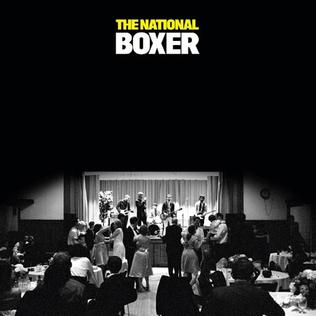
Among critics and fans, the National's third album Alligator has become synonymous with the term grower. Released to minor acclaim early in 2005, the album has since quietly and steadily built up a large, avid listenership. Matt Berninger's lyrics-- initially off-putting and seemingly obtuse in their non sequiturs and stray details-- proved unpretentiously poetic over time. His sober baritone and dogged repetition of phrases and passages made it sound like he was trying to figure the songs out in tandem with the listener. The band, meanwhile, played around the hooks instead of hard-selling them, so that in a sense, despite two previous albums and a killer EP, we all pretty much learned how to listen to the National on Alligator, eventually finding deeper shades of meanings in the words, sympathizing with Berninger's anxieties, laughing at his grim jokes, and tapping out the band's complex rhythms on desktops and steering wheels.
It's a testament to the good will engendered by Alligator that fans are now likewise calling the National's follow-up, Boxer, a grower. Despite the scrutiny greeting its release (brought on by the inevitable leaks), many listeners seem to be approaching these songs patiently, giving Boxer the space and time to reveal its dark, asymmetrical passageways. In a sense, the album demands it. The same elements that kept listeners returning to Alligator (Berninger's clever turns of phrase, the band's dramatic intensity) are present on Boxer, but are now more restrained and controlled.
From the first piano chords on opener "Fake Empire", the National create a late-night, empty-city-street mood, slightly menacing but mostly isolated. The 10 tracks that follow sustain and even amplify that feeling, revealing the band's range as they play close to the vest. Aaron and Bryce Dessner's twin guitars don't so much battle one another as create a unified layer that acts as a full backdrop for the other instruments, while touring member Padma Newsome's string and horn arrangements infuse songs like "Mistaken for Strangers" and the stand-out "Ada" (featuring Sufjan Stevens on piano) with subtle drama. But Boxer is a drummer's album: Bryan Devendorf becomes a main player here, never merely keeping time but actively pushing the songs around. With machine precision, his fluttering tom rhythms add a heartbeat to "Squalor Victoria" and give "Brainy" its stalker tension. In fact, the title Boxer could conceivably be a reference to the way his rhythms casually spar with Berninger's vocal melodies, jabbing and swinging at the singer's empathies and emotions.
Despite this implied violence, Boxer doesn't have the same aggressive self-reckoning and psychological damage assessment of Alligator. Here, Berninger sounds like he's able to look outward from that mental space instead of further inward. He observes the people around him-- friends, lovers, passersby-- alternately addressing them directly and imagining himself in their minds. Or, as he sings on "Green Gloves", "Get inside their clothes with my green gloves/ Watch their videos, in their chairs." He sounds more genuinely empathetic than previously (the accusatory you from the first two albums is thankfully absent), toying with ambiguity and backing away from outright satire. Certain themes continue to prevail: He maintains a fear of white-collar assimilation, addressing "Squalor Victoria" and "Racing Like a Pro" to upwardly mobile hipster-yuppies ("Underline everything/ I'm a professional/ In my beloved white shirt"), and clings to his American angst ("We're half awake in a fake empire"), as though recognizing the world's craziness makes him more sane.
Better even than these songs are the three mid-album tracks that toy with a love = war metaphor that miraculously avoids the obviousness that implies. On "Slow Show", over background guitar drones and a piano theme that echoes U2's "New Year's Day", he daydreams, "I want to hurry home to you/ Put on a slow dumb show for you/ Crack you up." But the capper is in the coda: "You know I dreamed about you for 29 years before I saw you." That hard-won contentment begins to crumble in "Apartment Story", in which the world invades the couple's shared space, and in "Start a War", where the possibility of loss looms threateningly. "Walk away now and you're gonna start a war," Berninger sings against the band's simple, uncomfortably insistent rhythm, his concrete fears giving the song the extra heft of the personal.
Obviously, it's pretty easy to read a lot into the National's music and especially into Berninger's lyrics, but that shouldn't imply that Boxer is a willfully difficult or overly academic work. Like those on their last album, these songs reveal themselves gradually but surely, building to the inevitable moment when they hit you in the gut. It's the rare album that gives back whatever you put into it.
Richmond Fontaine - Thirteen Citees
 Uncut.co.uk:
Willy Vlautin has not been idle since the 2005 release of his sparse masterpiece, The Fitzgerald. There was an album of re-recorded work, showing Richmond Fontaine’s Portland roots in hardcore; an internet-only live set; and a novel, The Motel Life, which read like a prose version of one of his songs, following two losers round Reno as they waited for their luck to change.
As the laureate of the lost, the lonely, and the rootless, Vlautin was never likely to stand still, and while there is no dramatic change in the texture of his lyrics, the geography has altered. Vlautin’s drifters are still skirting the borders of oblivion, but their tales unfold against a desert backdrop. On “Ghost I Became”, he sends this stark postcard: “Desert dreams/Always sunny/And never grey/No noise/Just wind and sage.”
The words are spare, but the sound has expanded. Recording in Tucson, Arizona, producer JD Foster drafted Giant Sand’s Howe Gelb (piano on “$87 And A Guilty Conscience That Gets Worse The Longer I Go”) and Calexico’s Joey Burns and Jacob Valenzuela. The widescreen sound, with the melancholy mists of Paul Brainard’s pedal steel cooling Calexico’s Mexican spaghetti stylings, is a surprise after The Fitzgerald. Sometimes it masks the blunt beauty of Vlautin’s storytelling, but it can also add a noirish sheen: Valenzuela’s gorgeous trumpet on “The Kid From Belmont Street” turns a maudlin song into a shimmering pulp opera.
Vlautin has been inspired by his surroundings, and there are at least two classics. The closer, “Lost In This World” (with Burns on piano) is worthy of early Tom Waits, though Vlautin’s voice displays vulnerability where Waits offers beat-up defiance. “St Ides, Parked Cars, And Other People’s Homes” is little more than a short poem, and Vlautin almost talks the words. But when he gets to the part about “fuck-ups, hanging on in our own way”, you know, as ever, he’s not faking.
The Shins - Wincing the Night Away
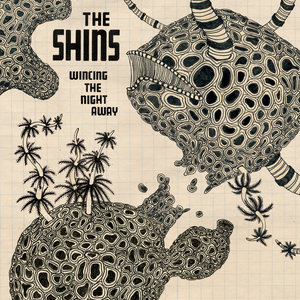
Last seen reducing lovely-bit-of-assassin-crumpet Natalie Portman to gushing tears in Zach Braff’s indie whingefest Garden State, hopes were riding high for a third instalment of profoundly joyous, literate guitar pop from Alberquerque’s finest.
So when Wincing The Night Away was leaked on the internet a full three months before its official release, it was snaffled up by the tech-savvy fans who swiftly registered their responses online. Consensus was split into two camps – “they’ve matured!” cried the diehards, while detractors pointed to the muted tone slick production as evidence that The Shins had lost some of their celebrated sparkle.
It certainly must have come as a bit of a shock. On ‘Sleeping Lessons’, arpeggiated keyboards shimmer and pop like bubbles rising lazily from frontman James Mercer’s watery vocal, but it’s two-and-a-half minutes before the band kicks in proper. Now, two minutes is a long time in Shins-world. Gilded pop hooks soar and beat their hasty retreat; tangents are pursued with relentlessly skewed logic; harmonies stack up and songs twist and turn out of all recognition. So 180 seconds of naught but watery keys is potentially quite worrying. But then swathes of hazy, thunderous guitar noise roll into earshot and suddenly everything clicks into place: it’s a finely-wrought piece of suspense, and the kiss-off is terrific.
Look elsewhere on the album and you’ll find abundant evidence of a newfound maturity, and not in the r’n’b sense of the word. It’s in the slouching, Betas-through-an-opiate-haze beats of ‘Sea Legs’. It’s in the way that the trebly, Cramps-ish lullaby ‘Pam Berry’ segues into epic first single ‘Phantom Limb’, a typically obtuse meditation on small-town life. The latter is classic Shins, but the hooks are more ripe, the delivery less hurried and more sure-footed.
Mercer has cited insomnia as a major influence around the time of writing for the album, and that much figures. If Oh, Inverted World and Chutes Too Narrow were like ADHD-riddled cousins, unable to inhabit their own thoughts for longer than a few seconds at a time, then Wincing The Night Away is the Ritalin-gorged riposte. Its bounce is more bleary-eyed; its euphoric bouts tempered by a weird, waking-dream sensation that some dark presence is stalking the peripheries of its foggy vision.
New Mexico may be a long way from palm-strewn beaches of California, but Mercer remains the Brian Wilson of his generation, an unrivalled pop conjurer whose elegant way with a melody dispenses with the notion that pop’s strictly for tarts. On Wincing The Night Away, he dispels yet another myth, that maturity and pop music go together like foot and mouth. So says we: roll on middle age.
Abonner på:
Opslag (Atom)